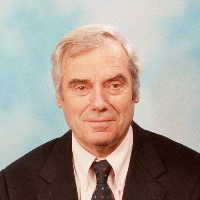
To the great regret of his many friends, colleagues and former students, Giuseppe (Pino) Tondello, Professor at the University of Padova, Italy, passed away on August 22, 2025. His research during a long and fruitful scientific career was mainly focused on ultraviolet spectroscopy and laboratory development of spectroscopic instrumentation, following an initial phase dedicated to plasma research at the Culham Laboratory, UK, and at the Center for Astrophysics, Harvard, USA. Thanks to his competence in UV and X-ray spectroscopy, he contributed significantly to space missions and space instrumentation dedicated to solar physics studies, starting with the participation in the teams defining the Grazing Incidence Solar Telescope (GRIST) mission, studied by ESA up to the phase-A level. The objectives of GRIST were later included in the scientific goals of the Solar and Heliospheric Observatory (SOHO). Pino’s contribution to the design, definition, and implementation of SOHO — the first cornerstone mission of the ‘Space Science – Horizon 2000’ ESA program, and the first solar space observatory under ESA leadership and implemented in collaboration with NASA — was of key importance. He was part of the SOHO study teams from the beginning. In the assessment and phase-A studies, the concept of an innovative EUV coronagraph to study the nascent solar wind in the solar corona was put forward. Pino was strongly supportive of this idea and helped to include an ultraviolet coronagraph-spectrometer in the SOHO payload. He then contributed to the design of such an instrument, that is, the Ultraviolet Coronagraph Spectrometer (UVCS). The proposal, presented to ESA by the Center for Astrophysics, Harvard, the Italian Space Agency (ASI), and the Technische Hochschule, Zurich, was selected and UVCS was successfully operative on the SOHO space observatory for more than one solar cycle. The ASI contribution to UVCS consisted in the design and development of the UV spectrometer of the coronagraph including two channels where the light was diffracted by toroidal gratings designed and developed by Pino and his Padova team. The excellent performance of UVCS, providing the first maps of the solar wind in the corona through the various phases of the solar cycle, probably would have not been fully achieved without his dedication, competence, and persistence.
Over the many years of his career, his team in Padova grew in both number and talent and Pino guided and promoted new projects, including the participation in solar system space missions such as the Rosetta cometary mission. At present his main legacy is represented by a large, well-established research group at the Institute for Photonics and Nanotechnology of the National Research Council active in different fields of applied optics, including space and laboratory optical and spectroscopic instrumentation, ultrafast and adaptive optics, thin films and coatings.
We are grateful to Pino Tondello, not only for his great contribution in building a solid tradition in solar physics space instrumentation in Italy, a tradition that has been the basis for developing the UV – visible light Metis coronagraph at present flying on the Solar Orbiter, but also for his friendship, his humor, his wit, his enthusiasm, and his tenacity. Thanks Pino.