
SolarNews
The Electronic Newsletter of the AAS Solar Physics Division
Volume 2026 Number 12 – 15 June 2026
Volume 2026 Number 12 – 15 June 2026
Sherry Chhabra, SolarNews Editor ([email protected])
CHAIR'S CHAT
Chair’s Chat
Posted by: Amy Winebarger
We are living in a time when things change quickly. It is difficult for anyone to stay on top of all the news or immediately perceive how changes in policy could impact science. Luckily, the AAS is very adept at following and understanding the latest developments. The AAS sends out general updates via their email list and occasionally releases Action Alerts when they encourage their members to get involved. To ensure that everyone knows about these Action Alerts, we are adding a section to SolarNews called “AAS Action Alerts.” Below is the Action Alert released by AAS last week. If we receive time critical Action Alerts, we will send out special issues of SolarNews.
The SPD committee received so many great responses from our call for feedback on the NASA Heliophysics Community meeting. I tried to respond personally to every email with my thanks, but if I missed you, let me offer it now. Thank you, thank you, thank you! The responses were thoughtful, considered, and very diverse. Some in our field were excited about the new direction, while others were concerned. I love that everyone has a distinct perspective – people generally don’t become scientists because they think like everyone else does. It did, however, make it difficult to distill the information into a single letter. The SPD Committee, with some help from our community, worked hard to capture all the thoughtful feedback in a cohesive way. We will share our response to Headquarters soon.
In our last Chair’s Chat, I filled you in on the elected members of the SPD committee. There are many others, though, that volunteer countless hours to help our community function. Today, I want to highlight our SolarNews editor, Sherry Chhabra. Sherry volunteers her time to put together these SolarNews releases every two weeks and, if there is time critical information, more frequently. SolarNews is how we keep the community informed of what is happening in the SPD, how we learn new science nuggets or about upcoming meetings, and how we remember our colleagues who have left us. For me, SolarNews has always helped me feel more connected to you all, even more so now. Without Sherry, or the previous editors before her, we would not have this great community resource. Thank you so much Sherry for the work you do for the SPD!
Until next time,
Amy
AAS ACTION ALERTS
Advocate Against Proposed Harmful Changes to Federal Grants
Posted by: AAS
We urge you to take the following two actions to advocate against these proposed changes.
Submit a Comment on the Proposed Rule
First, please submit an individualized comment on the proposed changes before the public comment period closes on 13 July. You can do so using our template as a starting point or directly on Regulations.gov. If you are not submitting a comment on behalf of your institution, please make it clear that you are responding in a personal capacity. OMB must respond to each unique, substantive comment, so please personalize the template before submitting it. AAS recently submitted a request to extend the comment period by at least 45 days; we will send you an update if this is successful.
Congress can take action against these proposed changes by adding language to the annual appropriations (i.e., funding) bills prohibiting the implementation of the regulation. However, many congressional offices are not yet aware of the severe harms that would be caused by this proposed rule. You can use our tool to easily write to your members of Congress, share your concerns, and encourage them to put language in the Fiscal Year 2027 appropriations bills that would prohibit implementation of the proposed rule.
We strongly encourage you to take the two actions above, and we hope that you also engage in further advocacy to protect the astronomical sciences community. Additional impactful actions that you can take are on our webpage of Suggested Advocacy Actions, and the AAS Policy Team can help you set up and prepare for meetings with your congressional offices locally (in-district) or on Zoom. Please reach out to [email protected] if you would be interested in such meetings.
Finally, applications are now open for the 2026 Congressional Visits Day, organized by AAS and the American Association of Physics Teachers for 14–15 September 2026. Apply by 5 July.
Thank you,
Roohi Dalal
Deputy Director of Public Policy
American Astronomical Society
WHO'S NEWS
Remembering Rock Bush
Posted by: Shea Hess Webber
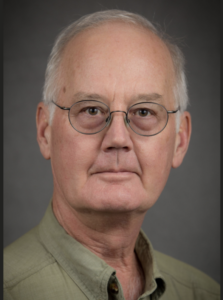
COFFIES is heartbroken to share that our emeritus project manager, Rock Bush, passed away on Sunday, June 7. Having seen him at our January All-Hands meeting, vibrant and excited about COFFIES’s progress, this comes as a shock to our community. Our condolences go out to his family, including his wife Carolyn and son Aaron.
Rock served as the COFFIES PM during Phase I and continued to help in Phase II as Dave Lauben joined us and got his bearings. He had also been part of the SpaceLab 2 flight operations before joining the Stanford Solar Physics Group. He believed strongly in the COFFIES science, mission, and people. Before COFFIES, Rock was integral to the development of MDI, AIA, HMI, and IRIS, and played a huge role in getting our solar observations to where they are today. And beyond all of that, he was just fun to be around. He will be sorely missed.
Shea Hess Webber
On behalf of the CET,
Representing the entire COFFIES Team
SCIENCE HIGHLIGHTS
HMI Science Nuggets – June 2026
Posted by: Oana Vesa
#228 “White-Light and Lyα Emissions in Solar Flares: Timing, Timescale, Energy, and Scaling”, contributed by De-Chao Song (http://hmi.stanford.edu/hminuggets/?p=4698)
#229 “Source-Region Magnetic Evolution and Precursors of the X9.0 Flare in Solar Cycle 25”, contributed by Yijun Hou (http://hmi.stanford.edu/hminuggets/?p=4712)
We welcome submissions on work related to HMI scientific goals. More information can be found at hmi.stanford.edu/hminuggets/.
New IRIS nugget by Juraj Lorincik
Posted by: Vanessa Polito
GENERAL NEWS
Deadline Extended to 30 September for the Special Issue: Solar Activity During Cycle 25
Posted by: Hui Li
Solar activity stands as a pivotal focus in solar physics research, and is the source of space weather that can profoundly impact the Earth’s environment and our daily lives. Thanks to remarkable advancements in both space-borne and ground-based observational techniques and facilities, numerical simulations and machine learning techniques, we have witnessed fruitful achievements across various facets of in the ongoing 25th solar cycle. As the cycle has seen its first (possibly the only) peak, we initiated a Special Issue entitled ‘Solar Activity During Cycle 25‘ in the Universe Journal (IF 2.6; JCR-Q2) published by MDPI, which aims to showcase the latest research findings along with relevant theoretical modeling efforts and instrumental advancements. Potential topics include, but are not limited to: 1) Solar dynamo and the solar cycle; 2) Solar magnetic field and its role in solar activity; 3) Solare flares: energy accumulation and release, triggers, dynamics, particle acceleration and hard X-ray (HXR) emission; 4) Coronal mass ejections (CMEs): source region, acceleration and dynamical evolution and propagation; 5) Solar activity and space weather: modeling, prediction and impact on the Earth; 6) Chromospheric and coronal heating: observational insights and simulation studies; 7) Machine learning applications in the diagnosis and analysis of solar activity; 8) Current and upcoming solar instrumentations.
Submission Call Extended: Call for Science Cases for FASR
Posted by: Sijie Yu
Please visit https://fasrtelescope.org/science/science-use-cases for a collection of published science cases, with additional cases in development. We continue to welcome science cases spanning the full breadth of solar and space weather sciences, including but not limited to magnetic reconnection and particle acceleration, coronal magnetography, coronal heating and solar wind acceleration, and drivers of space weather. Please do not hesitate to reach out to us if you are interested in developing a specific topic, even if you may not have all the technical details in hand – the FASR team is more than happy to work with you to develop an idea into a full science case. Lastly, please feel free to reach out if you are interested but need some more time. To contribute to a SciCase or learn more, please visit:
https://fasrtelescope.org/science/science-use-cases/
Sijie Yu, Lindsay Glesener, Jason Kooi, on behalf of the FASR collaboration
EMPLOYMENT OPPORTUNITIES
Postdoctoral Position in Kinetic Shock Physics and Solar Energetic Particles
Posted by: Nicolas Wijsen
The project will use particle-in-cell simulations to study particle acceleration at CME-driven shocks, with links to spacecraft observations and global space-weather models. Candidates with experience in kinetic plasma simulations, high-performance computing, heliophysics, or related areas are encouraged to apply.
The position is initially for one year, renewable for a second year subject to satisfactory performance.
Deadline: 3 July 2026
More information and application: https://www.kuleuven.be/personeel/jobsite/jobs/60682337?lang=en
For questions, please contact Nicolas Wijsen: [email protected]
Postdoctoral Position in Solar X-ray Spectroscopy at Space Research Centre PAS, Poland
Posted by: Żaneta Szaforz
The successful candidate will contribute to the development and characterization of Bragg crystal X-ray spectrometers for solar flare studies, including crystal optics, detector testing, instrument simulations, and laboratory/synchrotron experiments. The project aims to advance high-resolution X-ray diagnostics of flaring plasma dynamics.
The position is based in Wrocław, Poland, with a planned start date of 3 August 2026 (negotiable). The appointment is for 42 months.
Application deadline: 8 July 2026
Further details and application instructions:
https://cbk_pan.bip.gov.pl/ogloszenia-o-prace/42582_adiunkt-post-doc-w-zakladzie-fizyki-slonca-cbk-pan.html
For more inquiries, please contact us via [email protected].
PhD OPPORTUNITIES
PhD positions in Solar Flare Physics at the University of Applied Sciences Northwestern Switzerland (FHNW)
Posted by: Samuel Krucker
Requirements:
* MSc (or equivalent) in physics, space physics, astrophysics, or a related discipline
* Strong interest in data science and data analysis
* Enthusiasm for space related topics
* Team-player
* Fluent in English
Please send your application package to Säm Krucker ([email protected]) by email using the subject line ‘STIX PhD’ containing the following documents:
* CV (please inform yourself about the format of CVs used in Switzerland)
* Motivation letter (please indicate if you used the help of AI or not, and justify your choice)
* A link to your Master thesis (or pdf)
* Contact details of two references (no letters are needed at this stage)
Please inform yourself about Swiss labor laws.
Applications are due by 15th July 2026.
PhD Scholarship at Mackenzie University, Brazil
Posted by: Paulo Simoes
Main research topics:
+ Solar & Stellar Activity
+ Ionosphere/VLF
+ Space Geodesy
+ Radio telescope design & operations
Guidelines for applications: https://www.gcub.org.br/wp-content/uploads/2026/05/EN-Call-for-Applications-GCUB-Mob-N.-001_2026-.pdf
Feel free to reach out for any questions at [email protected]
MEETING ANNOUNCEMENTS
“Croeso i ESWW2028 yng Nghymru” – “Welcome to ESWW2028 in Wales”
Posted by: Kamen Kozarev
Venue Cymru is a modern, purpose-built conference centre offering excellent facilities, with panoramic coastal views and easy access to the town of Llandudno. The location combines a professional event setting with a relaxed seaside atmosphere, making it ideal for both formal sessions and informal networking.
Llandudno is well connected by rail and road, with direct train services from major UK cities and convenient access via nearby international airports, including Manchester and Liverpool. We will also explore arranging coach transfers from key international airports to help make onward travel as smooth as possible for delegates. A wide range of accommodation options are available within walking distance of the venue, from hotels to guesthouses, ensuring delegates can find something to suit all preferences and budgets.
All three organisations bring extensive experience in delivering ESWW and similar international events, and they will work closely together to ensure the 2028 meeting upholds the high standards and traditions of the annual ESWW meeting.
“ Rydym yn edrych ymlaen at eich gweld yng Nghymru” – “We look forward to seeing you in Wales”.
2nd Surya Foundation Model Workshop – September 14th to 18th, 2026
Posted by: Andres Munoz-Jaramillo
We are organizing the second research workshop focused on the recently released Surya foundation model for heliophysics in partnership with HelioCloud. Foundation models (such as GPT) are AI models, pretrained with big datasets, that aim to facilitate (and reduce the cost of) the development of a wide range of AI applications. Surya is a large AI model trained on data from the Solar Dynamics Observatory. HelioCloud is a scalable, community-driven platform to discover, process, and share petabytes of data in an open, cloud-native environment.
The workshop will take place from September 14th to 18th, 2026 at the NASA Goddard Space Flight Center, Greenbelt, Maryland and will be a hybrid virtual and in-person meeting.
The workshop consists of informational and hands-on components. The informational component consists of presentations and lectures about foundation models and how to fine-tune them for different heliophysics applications. The hands-on component will involve the development and training of fine-tuned models in using HelioCloud.
All informational components will be recorded and made available online after the workshop.
All are welcome to participate on the informational components; limited availability exists for the hands-on component. You will be able to find more information on https://www.heliofm.org (currently showing the results of the previous workshop). However, if you are interested in joining us for the informational or hands-on components. Please register using this google form:
For any questions, please contact Andrés Muñoz-Jaramillo at [email protected]
Abstract Deadline Reminder: Joint HELIOTECH and Orbital Flight Symposium!
Posted by: Cheryl Williams
Event Details:
Dates: August 31 – September 4, 2026
Location: Johns Hopkins Applied Physics Laboratory, Laurel, Maryland
Format: Hybrid—join us in person or virtually via Zoom
Call for Abstracts: Abstract submission will close on June 17, 2026. If you’re interested in presenting, please submit your abstract using the link below. Abstracts should be a maximum of 2,000 characters and entered directly into the submission form. Be sure to specify your preferred presentation type: oral (in-person preferred or remote) or poster (in-person only).
Submit your abstract here: 2026 Joint HELIOTECH and Orbital Flight Symposium Abstract Submission.
Registration: Registration for the symposium is now open as well! We encourage everyone to register early, whether you’re attending on-site or virtually: HELIOTECH 2026.
For additional information about the agenda, lodging, and ongoing updates, please visit our website: HELIOTECH 2026.
We look forward to your participation and contributions and hope to see everyone for an exciting and impactful event! Please reply with any questions or comments.
DASH/IHDEA 2026 – Registration and Abstract Submission is Now Open
Posted by: Jack Ireland
The Data, Analysis, and Software in Heliophysics (DASH) workshop brings together software developers, data practitioners, and scientists to present and discuss algorithms, software, analysis methods, data systems, and standards used throughout heliophysics. DASH especially aims to connect practitioners and promote collaboration across the international heliophysics software community.
The co-located International Heliophysics Data Environment Alliance (IHDEA) meeting encourages the use of common standards and services to enable data sharing, improve interoperability, and enhance science.
All ranges of experience are welcome. The program will include invited and contributed presentations, poster sessions, community discussions, and opportunities for collaboration. See the website for session topics. General submissions are also welcome.
Meeting website for 2026 abstract submission and registration: https://indico.dias.ie/event/2/
General DASH information: https://dash.heliophysics.net/
Mars L1 Workshop Announcement – Exploring a Red Planet Space Weather Mission Concept
Posted by: Sabrina Savage
For more information, contact [email protected] and [email protected].
Space Weather on Mars 2026: Abstract Submission and Registration Now Open
Posted by: Laura Rodríguez García
We are pleased to announce that abstract submission and registration are now open for the Space Weather on Mars meeting, which will be held in Madrid, Spain, from November 9–13, 2026.
We warmly invite you to submit an abstract and join us for a week of scientific discussions on the impact of space weather on Mars and related topics.
We would also like to inform you that a limited amount of funding is available to support travel expenses. Researchers interested in applying for travel support are encouraged to submit their request through the conference website when submitting their abstract.
Further information regarding the scientific program, abstract submission, registration, and travel support can be found on the conference website.
We look forward to welcoming you to Madrid in November 2026.
Best regards,