
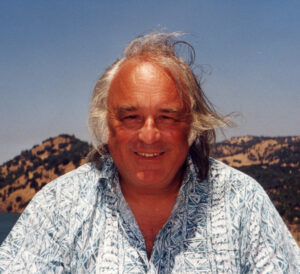
Gérard Grec, a pioneer in helioseismology, passed away on 3 August 2025, in Nice, France.
Gérard joined the first class of the astrophysics laboratory at the University of Nice created by François Roddier in 1966/67, with Éric Fossat, Claude Aime, and Jean-Claude Valtier. He joined forces with Éric Fossat in the design of a sodium optical resonance spectrophotometer (the initial idea having come from François Roddier) whose objective was to measure and understand the newly discovered “5-minute” solar oscillations. Gifted and passionate about instrumentation, he created a high-performance version of this sodium cell to detect solar oscillations with very high precision spectroscopy – this instrument concept was at the heart of three campaigns to South Pole, the IRIS network, and the GOLF instrument on SOHO. At the time, the temporal spectrum of solar oscillations was not yet resolved into individual modes because of the day–night cycle. With his long-time accomplice and thesis supervisor Éric Fossat, and Martin Pomerantz, they embarked for Antarctica in 1979, at the base at South Pole, in order to be able to continuously measure the Sun and its oscillations for a week thanks to the instrument built by Gérard and completed on-site at -40 °C (or F)! With ten meters of a roll of a paper recorder under their arm, on which an oscillation was visible every few centimeters, they returned to Nice and patiently measured the points by hand to make a Fourier transform that displayed the fine structure of the solar-oscillation spectrum and paved the way for helioseismology, which would later constrain the nature of solar neutrinos, as well as the internal structure and rotation of the Sun. These pioneering observations were published in Nature in 1980. and Gérard defended his thesis the following year.
Two more campaigns to Antarctica followed, refining the first results. When their results were published in 1983, Gérard and Éric introduced the famous “échelle diagram”, a technique that consists of chopping up and stacking the spectrum on itself to better detect deviations from the nearly constant separation of the frequencies of the oscillations. This diagram has since been universally used to study solar and stellar oscillations from ground and space instruments.
Their collaboration continued with the development of the International Research on the Interior of the Sun (IRIS) network of solar observatories (1990 – 2001), the principle of which was to overcome the gaps in the time series of observations imposed by the day–night cycle at a single site by placing telescopes at different terrestrial longitudes. This network was, again, based on a sodium cell, as a continuation of the epic in Antarctica. Here, again, Gérard’s talent for instrument building allowed IRIS to see the light of day. The network lasted the equivalent of the sunspot cycle (11 years) and made it possible to study the variations in the properties of the oscillation modes with the cycle, paving the way for constraints on the Sun’s internal magnetism.
At the same time, Gérard worked hard to create the first space instrument using radial velocities (Global Oscillations at Low Frequency: GOLF) placed onboard the SOHO mission (1995), and still in operation 30 years later! Although the primary objective was to detect the (buoyancy) gravity modes of the deep interior at the surface of the Sun, the GOLF measurements made it possible to measure the solar acoustic modes with exceptional precision and resulted in the measurement of the differential rotation within the Sun and to further refining the influence of solar magnetism on the oscillations. Gérard was the first project scientist of the instrument and one of its finest connoisseurs.
His talent for instrumentation has led to major advances in solar physics and he will be sorely missed by all those who had the privilege of knowing him, working with him, and appreciating his contributions to our knowledge of the Sun.
L. Bigot, P. Boumier, T. Corbard, E. Fossat, B. Gelly, B. Pichon, J. Provost, C. Renaud, F.-X. Schmider